 Block
Block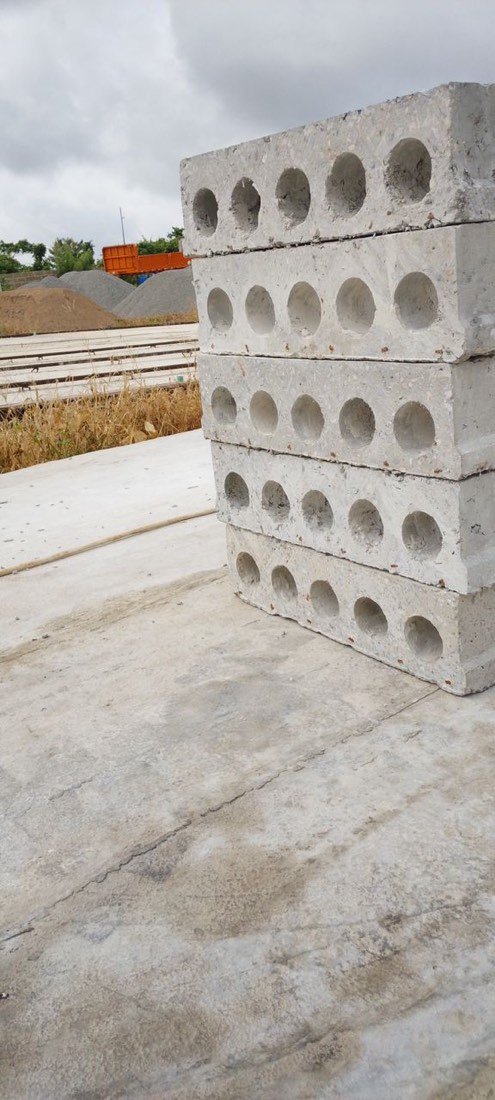
On a traditional site, concrete is a waiting game. You build formwork, pour, then wait for it to cure before you can move on — and the weather gets a vote. Precast removes the waiting from your critical path by doing the slow part somewhere else, in advance.
Where traditional construction loses time
A cast-in-place floor or wall ties up your site through a sequence that can't be rushed:
- Formwork has to be built, propped and checked before a single drop of concrete is poured.
- Curing takes days — and you can't strike the props or load the structure until it's reached strength.
- Weather stops work: rain, heat and dust all interfere with an open pour.
- Labour stacks up, because each stage waits on the one before it.
Every one of those steps happens on your site, in sequence, with your programme on hold.
How precast changes the maths
With precast, the beams, slabs, columns and panels are cast and cured in a controlled yard while your site is still being prepared. By the time the foundations are ready, the components are too. What arrives is a finished part — you're assembling, not casting.
The pour, the cure and the wait all happen off your critical path. Your site does the fast part: lifting parts into place.
That's why a floor that might take weeks to form, pour and cure in place can be installed in a fraction of the time once the components land on site.
Speed you can actually bank
Faster isn't only about finishing sooner — though that matters. It also means:
- Predictability: factory curing isn't at the mercy of the weather, so your dates hold.
- Less on-site labour: fewer people, for less time, doing assembly rather than wet work.
- A cleaner, safer site: less formwork, less mixing, less mess to manage.
Is precast right for every job?
Precast shines on repeatable elements — floors, boundary walls, columns, standard spans. For those, the time and consistency gains are hard to beat. The best way to know is to tell us what you're building and let us size it up.